

The Olla Story
Save water and grow healthier veggies

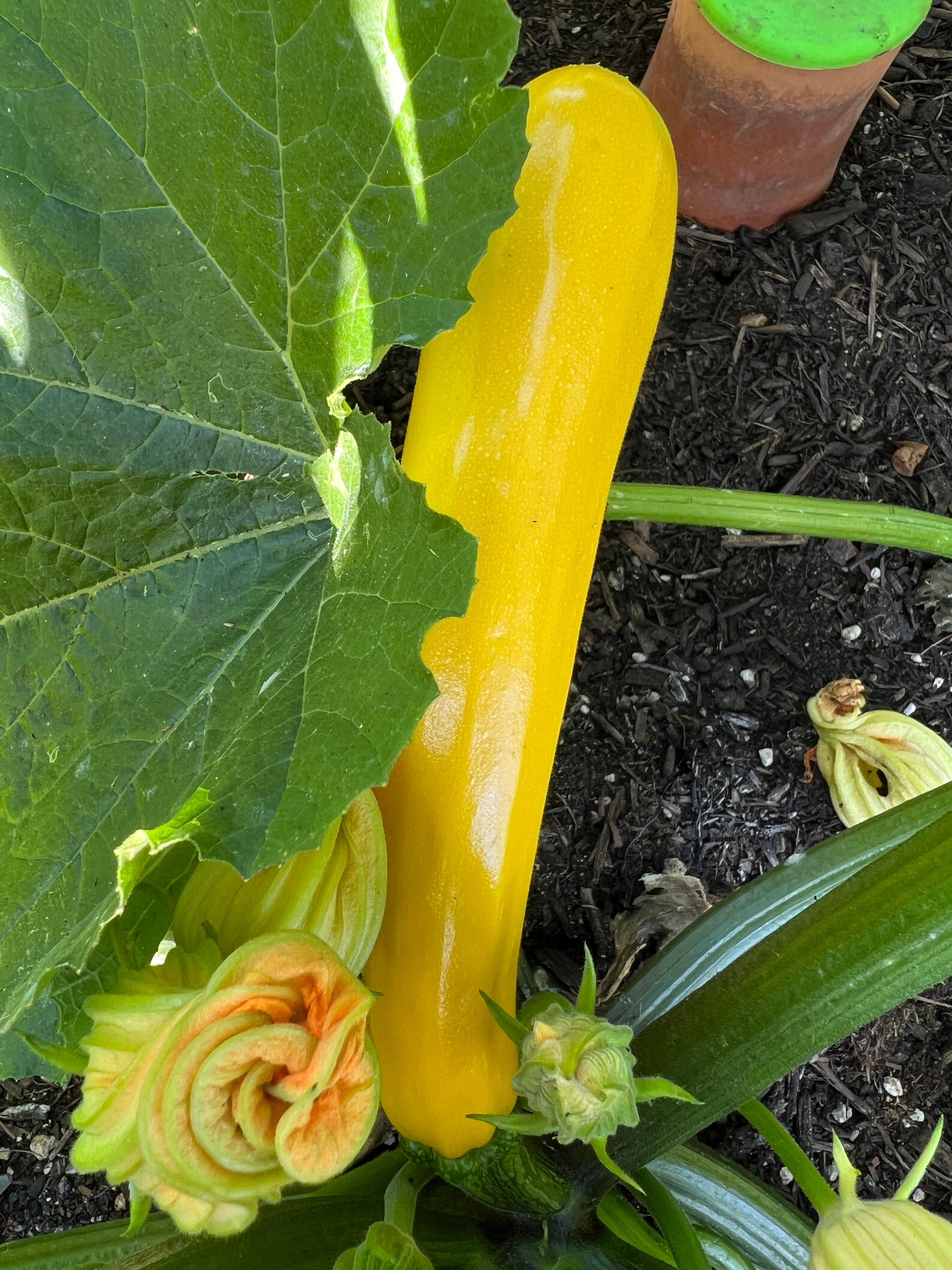
Gorgeous zucchini grown with ollas.
As we all know, water is becoming a precious commodity. My yard is home to four raised beds of veggies, eight fruit trees, and an assortment of flowers, all requiring healthy drinks of nature’s elixir. I’ve tried drip irrigation, hand watering, and sprinklers, and still so much water ends up on top of the soil, where it evaporates.
While researching sites for a gardening blog I write for, I came across a photo of a method of irrigation that completely shifted my perspective on effective watering systems. Enter the olla, pronounced “oy-yah.”
The ancients got so many things right and according to records, the olla was first introduced as an irrigation method in China or Northern Africa (no one really knows) around 4000 years ago. These unglazed pottery vessels provide a unique method of delivering water to your garden beds. Their wide bellies and tapered necks are buried under the soil, with only the tops showing, and then filled with water. A cap is placed on top to prevent evaporation and mosquito attraction.
You will need to hand water until a root system is established but once that occurs, in a few weeks, the olla does all the work. So, what’s the magic behind all this?
The olla provides a slow, even release of water, only when needed. The porous surface of the olla creates a soil-moisture tension between wet and dry so the roots congregate around the vessel and drink only when they are thirsty. If it rains, the olla senses the wet soil and retains its water.
A three-gallon olla will water a three-foot diameter circle for three to seven days. If you are a small-time gardener, like I am, the investment is worth the payoff in water bills.
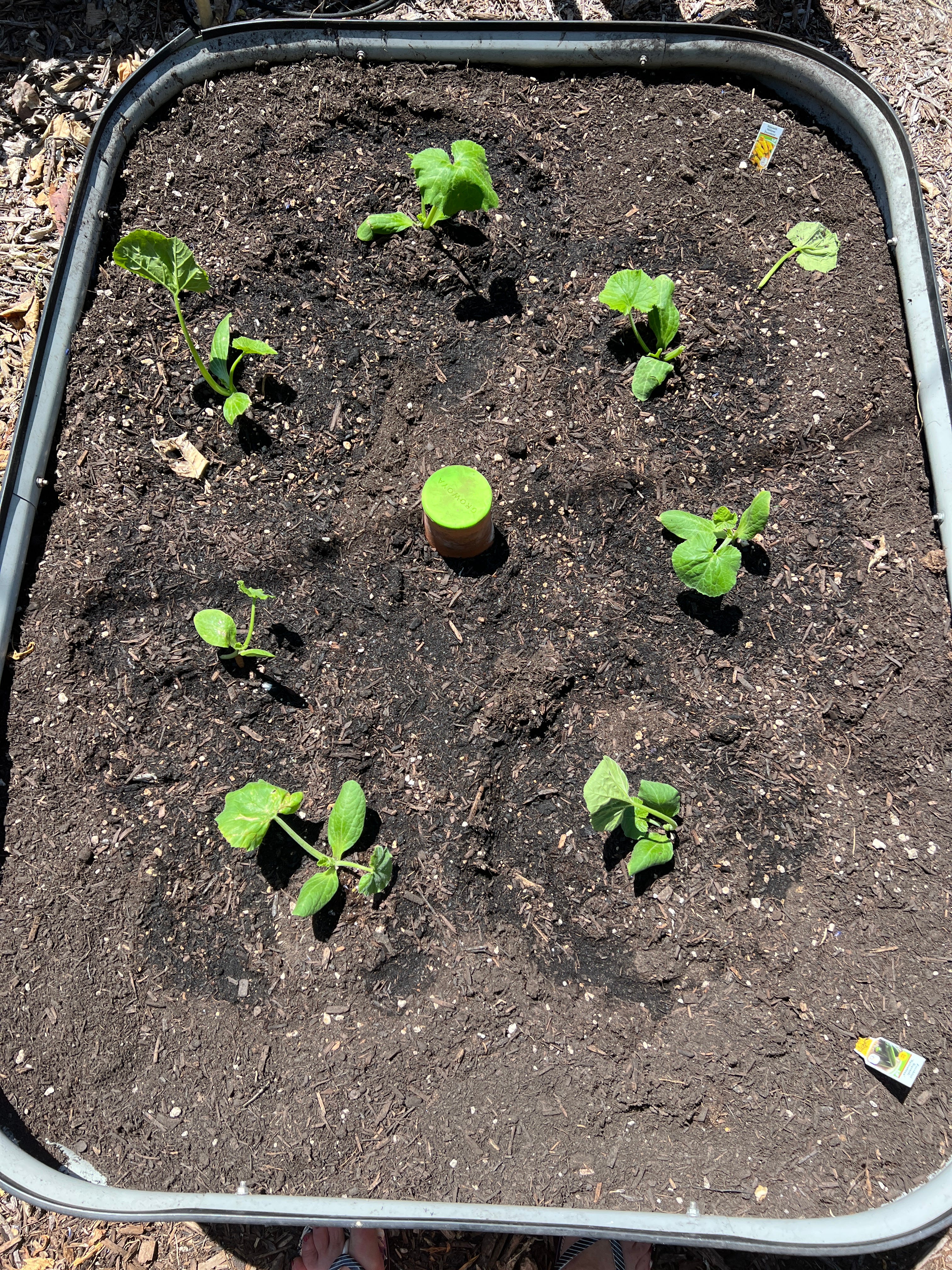
A large olla will water all these seedlings.
Why ollas and what are the benefits?
For one, water isn’t lost due to surface evaporation or runoff. The roots need water, not the dirt on top!
Your plants will be more vigorous and healthy because they are getting even watering. The cause of under-production and splitting veggies, like tomatoes, is caused by too much, then too little water. This solves that problem.
The water doesn’t touch the leaves of the plants, which often causes mold or fungus to form.
The olla watering system allows for dense root growth, which in turn, will give you lusher plants and higher productivity.
The best reason of all—research has shown that 50-70% of water can be saved by using the olla method. Incredible!
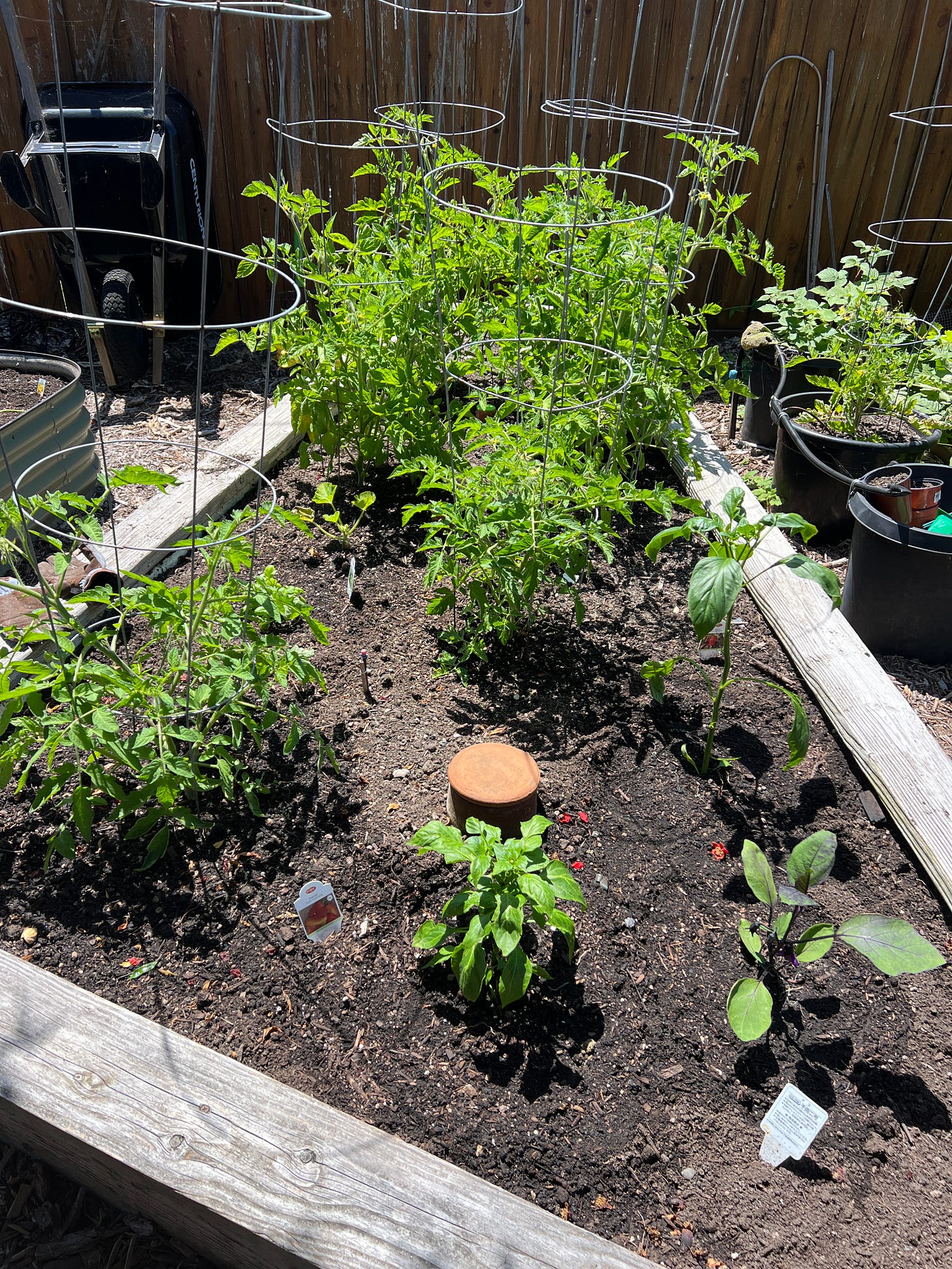
This bed has three medium ollas watering the plants.
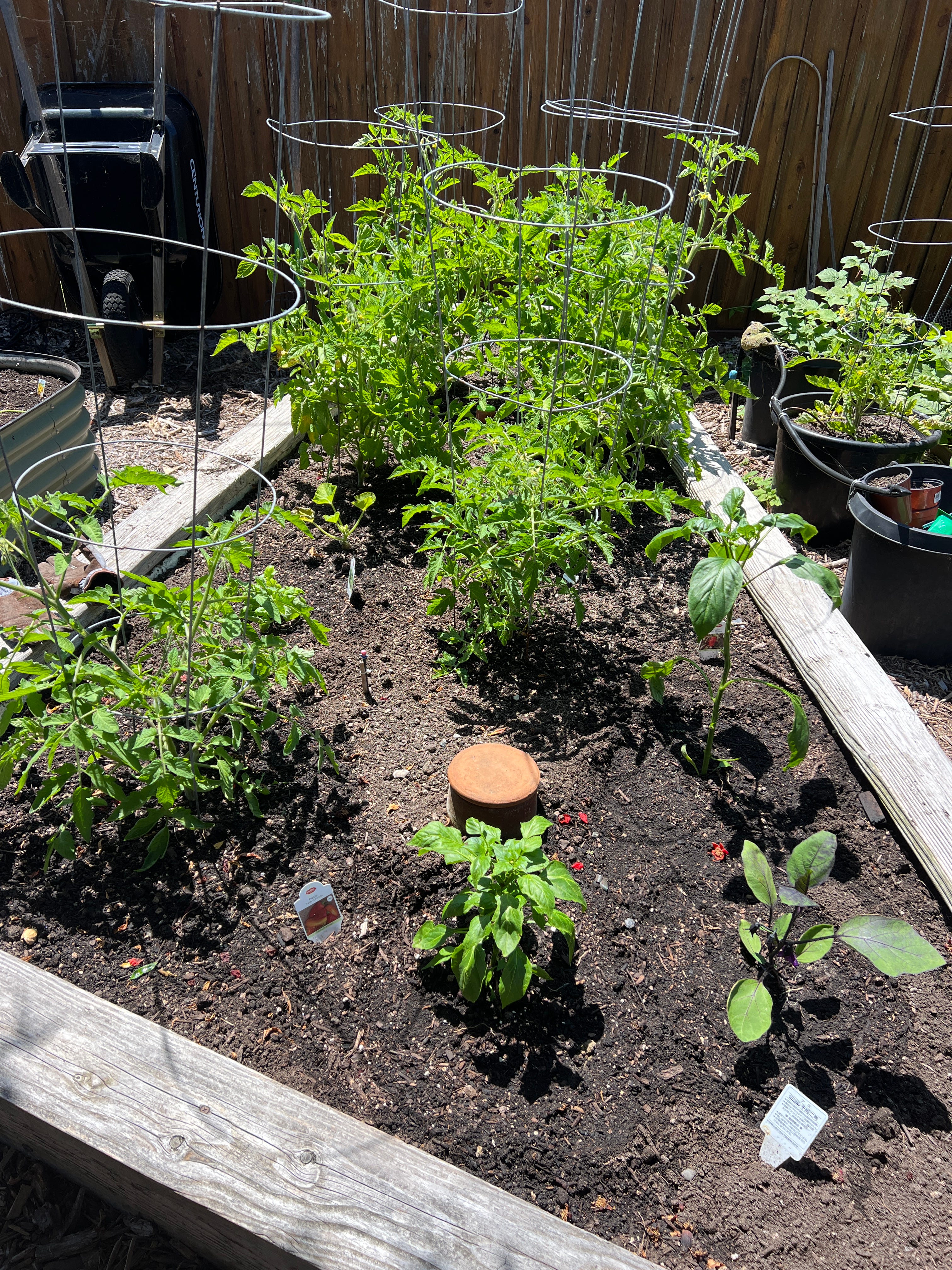
One caveat—if you live in a cold climate, please remove the ollas for the winter. A freeze can cause your olla to crack and break.
To be honest, ollas are not easy to find. I got mine from Growoya. They are lightweight and are easy to dig into my garden. You can make your own olla by gluing two pots together and sealing up the bottom. Just be sure the glue is non-toxic. Many gardeners advise against this unless you are sure no toxins will be released into the ground and then into your veggies. Here is a website that shows you how to make your own. Water Use It Wisely.
I’m so glad I discovered ollas. It’s a wonder that such a small thing can make a big difference. Mother Nature will thank you!
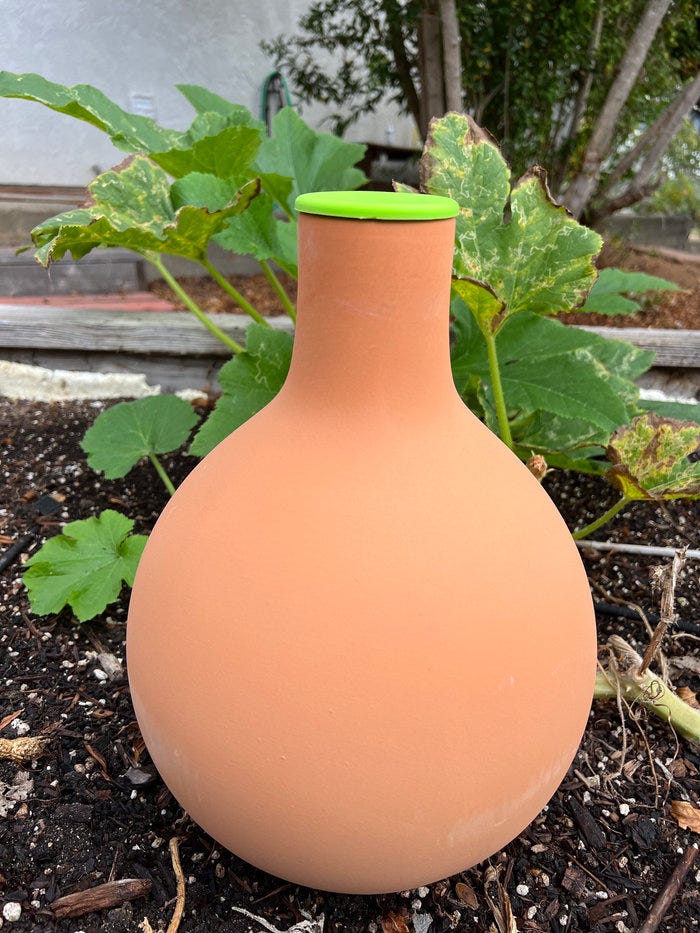
This three-gallon olla will water a three-foot diameter circle of plants.
The glory of gardening: hands in the dirt, head in the sun, heart with nature. To nurture a garden is to feed not just the body, but the soul. – Alfred Austin
Ciao for now,

Love this article Mary, Never heard of an OIla! Mary Greenthumb Knight!
What a great idea. I like the challenge of making your own with two pots. I bet the kids and grandkids would get into this project. Keep the interesting, useful, unique ideas coming.